How To Plan A Useful Entryway Organisation Routine For Busy Households
A practical step-by-step guide to how to plan a useful entryway organisation routine for busy households, including preparation, instructions, common issues, tips, and next steps.
How To Plan A Useful Entryway Organisation Routine For Busy Households
A practical entryway routine helps busy households reduce morning chaos, keep essentials easy to find, and create a calm transition between home and outside. This guide explains how to set up a simple daily and weekly plan that works for all family members, even when schedules differ. You'll learn what to keep near the door, how to assign small tasks, and how to review the system so it stays effective. The steps are designed to be flexible and low-effort, so the routine can become a natural part of your day rather than another chore.
Fast Answer
- Set up a designated spot for each person's daily items, like keys, bags, and shoes, and add a small laundry basket for dirty items to prevent piles.
- Create a five-minute daily reset and a ten-minute weekly review to keep the entryway organized and adjust the routine as needs change.
Before You Start
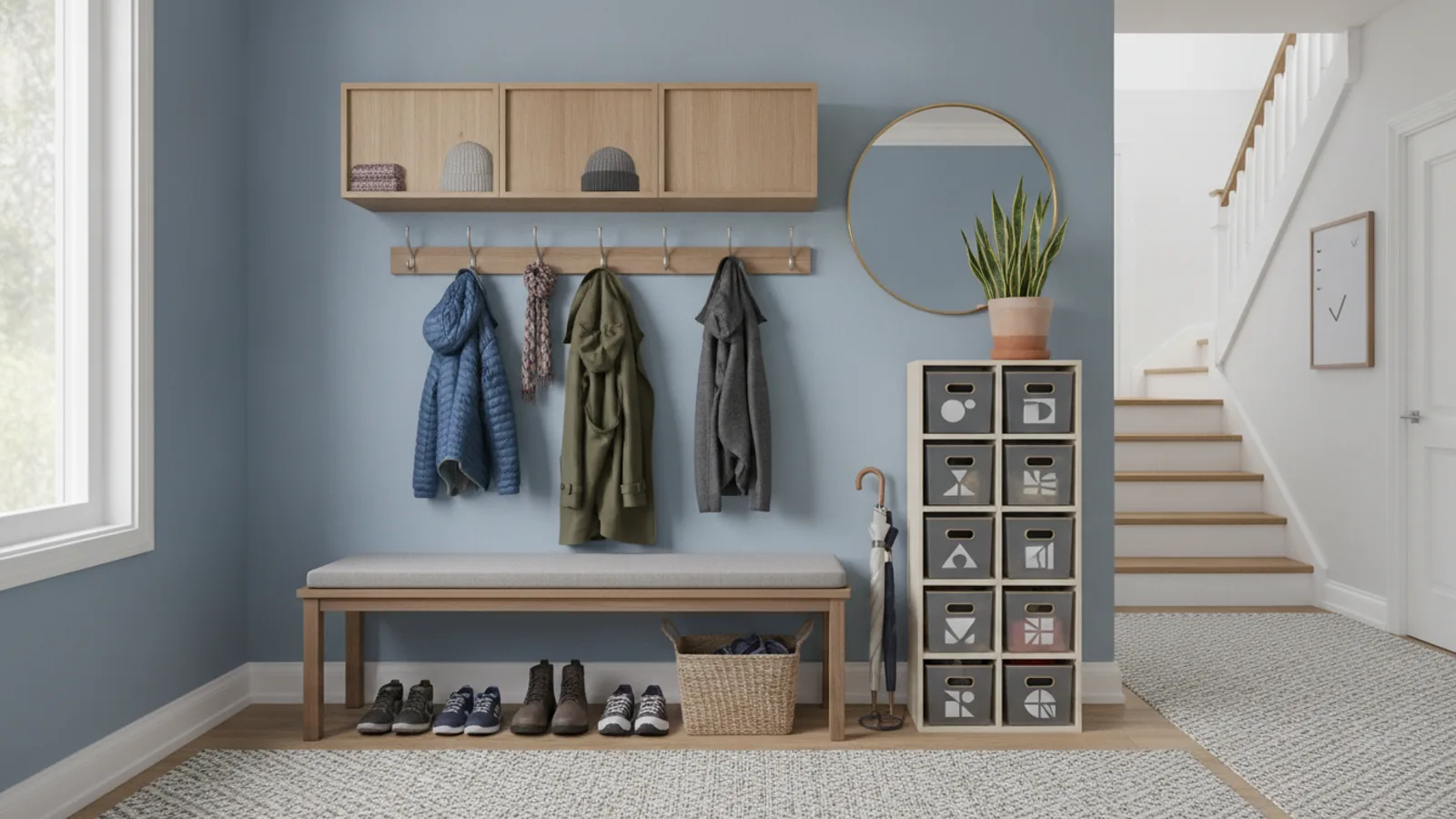
- Choose a landing zone near the entrance, such as a bench, shelf, or wall-mounted hooks, and clear it of anything that isn't part of the routine.
- Gather basic storage items like baskets, hooks, a small tray, and a labeled bin for each family member, using what you already have if possible.
- Set a weekly time to review the routine, such as Sunday evening, and keep a simple checklist or whiteboard near the door to remind everyone of tasks.
- Talk to everyone in the household to agree on which items are essential to keep in the entryway and which should be stored elsewhere.
Step-by-Step Instructions
Assign a home for each essential item
The first step is to give every daily item a clear and consistent place in the entryway. Start by listing the items that come in and out with you every day, such as keys, wallets, bags, shoes, outerwear, and reusable shopping bags. Then, assign a specific spot for each: a small tray for keys, a hook for each coat, a shelf for bags, and a basket for shoes. Make sure the spots are easy to reach for everyone in the household, including children if they use the entrance. As you assign the homes, think about the daily flow: what do you reach for when leaving, and what do you need when returning? Place the most frequently used items at eye level or between hip and shoulder height. After you have assigned all the items, test the system by physically placing each item in its spot and checking whether it fits comfortably and stays put. This practical check matters because if a home is awkward or unattractive, you will likely skip it, and the routine will fail. A clear and convenient home for each item makes the routine automatic, so you spend less time searching and more time moving on with your day.
Set up a simple sorting system for incoming items
The entryway is a place where things from the outside world often land: mail, school papers, groceries, and personal items. Without a system, these items quickly become clutter. Set up a three-bin sorting system near the entrance: one for recyclable paper, one for items to put away elsewhere, and one for things to deal with later, such as bills or invitations. Clearly label each bin and make sure they are large enough for a typical day's flow. When you come in, take a moment to sort each item into its bin. This may feel tedious at first, but it prevents small tasks from piling up. After allocating a bin for each type, plan to empty the 'put away' bin during your daily five-minute reset, and go through the 'deal with later' bin once a week. A practical check is to see if the bins collect anything that does not match their labels after a few days; if so, adjust the labels or the bin sizes. This check matters because it keeps the sorting system honest and prevents the bins from becoming catch-alls. By separating incoming items at the door, you reduce the chance of losing important papers and make the rest of your home feel less cluttered.
Create a daily arrival and departure routine
To keep the entryway organized, build a simple daily routine for leaving and arriving. In the morning, before you leave, do a quick sweep: grab your keys from their tray, put on your shoes from the shoe basket, and take any bags or items that are ready to go from their hooks. When you come home, take off your shoes and place them in the basket immediately, then hang your coat and put your bag in its spot. Next, quickly sort any items you brought in using the sorting system you set up. This arrival and departure flow takes less than two minutes but has a big impact. To make it stick, create a mental or written checklist: depart with essentials, arrive and reset. A practical check is to see if you ever have to search for your keys or rush in the morning because you cannot find something. If you do, then the routine is not being followed, and you need to adjust the spots or add a reminder. This check matters because the routine's goal is to eliminate morning stress and create a calm, predictable start to your day. With consistency, the routine becomes a habit that requires little thought, leaving you free to focus on the day ahead.
Implement a five-minute evening reset
Evenings are a perfect time to prepare for the next day and keep the entryway from becoming chaotic. Set aside five minutes before bed to reset the entryway. During this time, place any loose items back in their designated spots: shoes in the basket, coats on hooks, bags on shelves, and keys on the tray. Empty the 'put away' bin and take its contents to their proper rooms if they are not needed in the entryway. Quickly wipe down any surfaces that need it, such as a bench or a shoe bin, and ensure that everything looks tidy. A practical check is to take a photo of the entryway after the reset and compare it to a photo you took when you first set up the system. If the space does not match, you know that something is off, such as too many items or a spot that does not work. This check matters because it gives you an objective view of whether your routine is effective. A five-minute reset not only keeps the entryway neat but also mentally closes the day, making it easier to relax and prepare for tomorrow. Over time, you will find that the reset becomes a soothing habit that signals the end of the day.
Conduct a weekly review and adjust the system
Once a week, take a longer look at your entryway routine to see what is working and what needs adjustment. Set aside ten minutes on a day that is less busy, like Sunday. Walk through the entire entryway and assess each zone: the landing zone, the storage areas, and the sorting bins. Ask yourself questions: Are items accumulating where they should not? Are there any things that do not have a home? Is the system still matching your household's current needs? For example, if you have recently started a new activity that requires equipment, you may need to add a hook or a bin. If you find that a particular hook is never used, consider repurposing it. A practical check is to survey each family member quickly, asking if they find the entryway easy to use. This check matters because the routine should serve everyone, and a weekly review helps you catch small problems before they become big clutter. Adjust the system based on your observations, but keep the changes minimal and tested. The weekly review keeps the entryway functional and prevents the routine from becoming stale or ignored.
Use negative space to maintain calm
An organized entryway is not just about what you add; it is also about what you leave out. After setting up the routine, look for areas that are still empty or have minimal items. These 'negative spaces' help the entryway feel calm and prevent it from becoming overloaded. Make a rule that at least one shelf or countertop in the entryway remains clear at all times. If you find that you are filling every available surface, that is a sign that you have too many items or not enough storage. A practical check is to intentionally leave one surface completely empty for a full day and then see how quickly it becomes cluttered. If it does not fill up, you have a good buffer. This check matters because negative space gives your eyes a rest and reduces the visual chaos that can make a busy household feel even busier. It also provides flexibility for unexpected items that need a temporary spot. Maintaining negative space is part of a sustainable routine because it forces you to be selective about what you keep near the door.
Quick Reference
| Situation | Action | Why it helps |
|---|---|---|
| You come home with a bag full of groceries and no free hand to put away shoes. | Set the bag on the floor or a chair, then immediately place your shoes in the basket and hang your coat. Once your hands are free, pick up the bag and put it where it belongs. | This prevents you from creating a pile of shoes and coat near the door, which can quickly become a tripping hazard and add to clutter. |
| You cannot find your keys in the morning because they are not in the designated tray. | Start by looking in the tray first, then check the most likely spots like pockets, countertops, or near the door. If they are still not there, do a quick five-minute search in the 'deal with later' bin and any bag you carried the previous day. | Searching systematically rather than randomly saves time and helps you remember where you last put them, reinforcing the habit of using the tray. |
| Family members complain that the entryway is too crowded and they have to step over items. | Declare a temporary rule that only one pair of shoes per person is allowed by the door, and move any extra shoes to a closet or bedroom. Also, empty the 'put away' bin and take items to their proper rooms immediately. | Reducing the number of items in the entryway directly decreases visual and physical clutter, making the space safer and more inviting for everyone. |
Common Issues
- The entryway quickly becomes cluttered again because family members do not follow the routine.: Hold a brief family meeting to explain the reason for the routine, then make each person responsible for their own designated spots. Use a visual chart or a simple checklist on the wall to remind everyone. Praise consistent behavior, and if needed, set a gentle reward for a week of tidy entryway. Also, simplify the system by removing bins or hooks that are rarely used.
- There is not enough storage for everyone's items, leading to piles of shoes and bags.: Reassess what truly needs to stay in the entryway against what can be stored elsewhere. Consider adding a wall-mounted shelf above the door or a narrow bench with internal storage. If hooks are limited, use one hook per person for coats, and install an over-the-door shoe organizer. For items that are not used daily, allocate a bin in a closet or garage.
- Stray items like mail or kids' toys end up on the floor because the sorting bins are full or not used.: Check the bins during the weekly review to see if they are overflowing or we cause they are not present. If full, either increase their size or schedule a time to empty them more often. Make sure the bins are clearly labeled and placed at a convenient height. For toys, keep a small basket in the entryway where they can go temporarily, then return them to the playroom during the evening reset.
Advanced Tips
- For households with multiple people, use colored labels or personal baskets so that everyone can quickly see their own space and know exactly where to put their items.
- Incorporate a charging station in the entryway for phones and tablets, but use a small tray with a short cable to keep cords neat and out of the way.
- Use a foot-operated boot tray or a small mat with a raised edge to contain wet or muddy shoes during rainy seasons, making cleanup easier and protecting floors.
Final Checklist
- Every member of the household knows the designated spot for their keys, bag, shoes, and coat.
- The entryway has a clear five-minute daily reset that is actually done each evening.
- Once a week, you review the routine and adjust for any changes in schedules or needs.
- At least one surface in the entryway remains empty to keep the space calm and uncluttered.
FAQ
How can I keep the routine going when we have irregular schedules?
Focus on a core set of actions that happen every time you enter or leave, regardless of the time. For example, always put keys on the same tray and shoes in the basket. Use a simple checklist on a whiteboard to serve as a visual reminder for everyone. If someone misses a day, don't get frustrated; simply do the reset the next time you pass through. Keep the routine flexible enough to fit different schedules, and regularly check with the family to see what is working.
What if my entryway is just a narrow hallway without room for storage?
Use vertical space with wall-mounted hooks, a slim shelf, or a over-the-door organizer for shoes. A tiered shoe rack on the floor can hold multiple pairs without taking much space. For bags and keys, install a small tray or a magnetic strip on the wall. If possible, add a fold-down bench that can also store items. Even in a narrow hallway, you can designate one small area for essentials and keep it minimal.
How do I get my kids to participate in the routine?
Make the routine fun and visual: assign each child their own colored hook or labeled bin, and use a star chart or sticker system for consistent participation. Explain the benefits of having everything easy to find so they can leave for school without rushing. Start by doing the routine together for a few days, then gradually let them take ownership of their tasks. Remind them that a tidy entryway means more time for play.