How To Plan A Small Living Room Lighting Update Without Rewiring
A practical step-by-step guide to how to plan a small living-room lighting update without rewiring, including preparation, instructions, common issues, tips, and next steps.
How To Plan A Small Living Room Lighting Update Without Rewiring
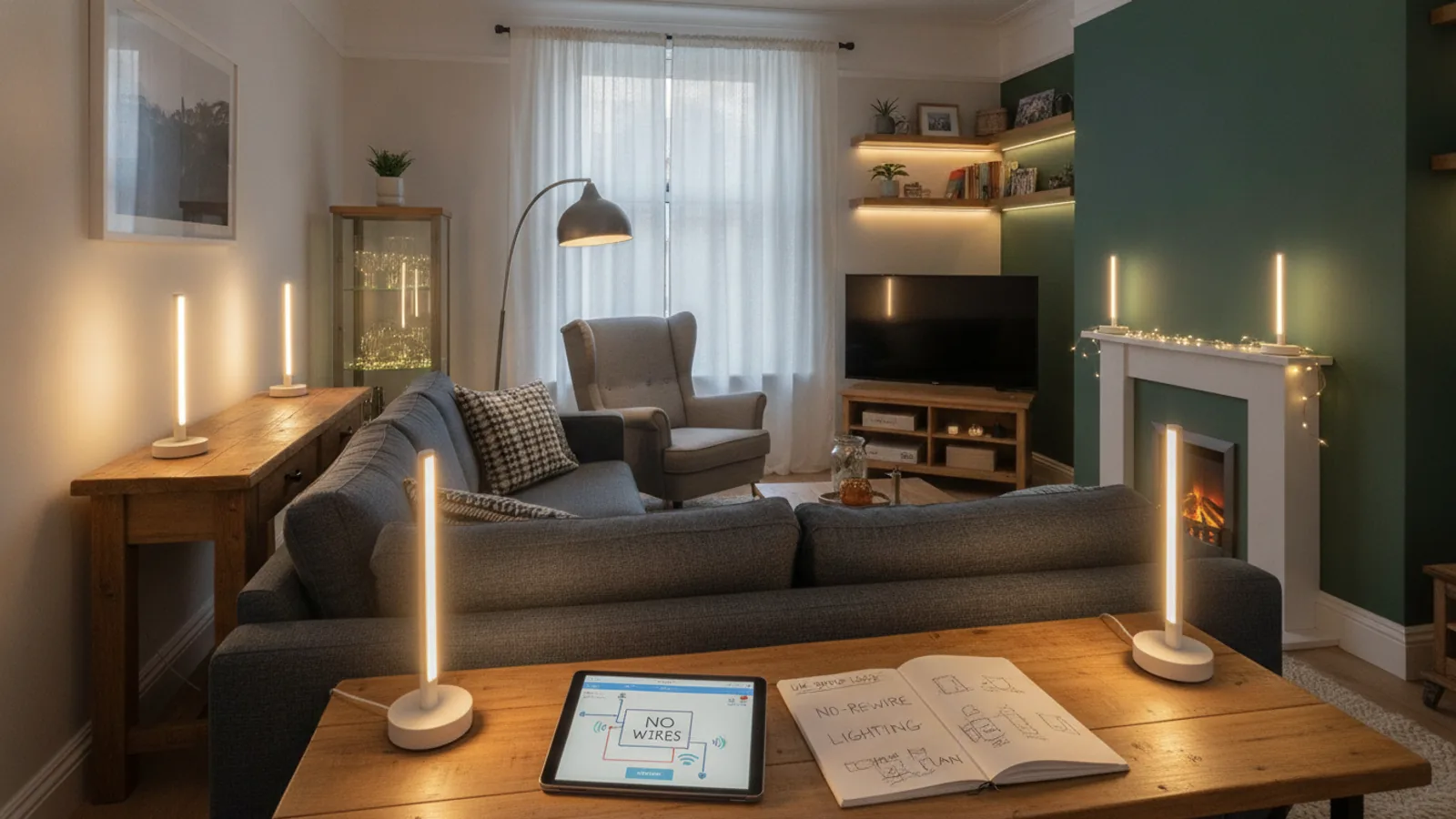
This guide provides a practical, step-by-step plan to update the lighting in a small living room without any rewiring. By strategically layering ambient, task, and accent light, selecting plug-in fixtures, and using smart controls, you can completely transform the look and feel of the space, improving both function and comfort.
Fast Answer
- Start by mapping out the room's current light sources and identifying dark corners or areas where you need more focused illumination.
- Then, choose a mix of plug-in floor lamps, table lamps, and plug-in wall sconces to create layers of light, and add dimmer switches or smart plugs for control.
Before You Start
- Measure the room's dimensions and sketch the layout, marking furniture positions and note where existing outlets are located relative to seating areas.
- Decide on the purpose of lighting in each area: general overhead, reading, accent for artwork, or ambient glow for relaxing.
- Inventory current lamps and fixtures to see what you can repurpose, and list what new pieces you might need, like floor lamps, table lamps, or plug-in sconces.
- Test which outlets are controlled by wall switches and which are always hot, using a lamp or a simple plug-in tester to know your control options.
Step-by-Step Instructions
Assess Your Current Lighting and Needs
Begin by spending an evening in your living room and notice how the light falls. Turn on all existing lights and walk around, observing any shadows or areas that feel dim. Look for spots where you read, do hobbies, or simply relax. Consider the tasks performed in the room and the mood you want to create. Make a simple map of the room and mark the locations of all power outlets. Note which outlets are controlled by a wall switch and which are not, as this will affect your choices. Also take note of the overall color temperature of your current bulbs; if they are mismatched, the room may feel disjointed. This assessment is your foundation, so be honest about what works and what doesn't. You may discover that you have too much bright overhead light but lack soft ambient light, or that your favorite reading chair is in a dark corner. These observations will guide every later decision.
Plan Your Layered Lighting Scheme
Now that you know your needs, plan a layered approach that involves three types: ambient, task, and accent. Ambient lighting provides overall illumination, task lighting helps you see for specific activities like reading, and accent lighting highlights objects or architectural features. For a small living room, start with a central floor lamp or a pair of matching lamps to give a soft, diffuse base. Then add a task light near your primary seating for reading or close work, such as an adjustable floor lamp. Finally, use small accent lights, like plug-in wall sconces or a picture light, to draw the eye to art or shelves. Sketch where each lamp or fixture will go, ensuring they are near outlets and follow the paths you walk. Think about the height: floor lamps should be tall enough to cast light over your shoulder, and table lamps should be at eye level when you are seated. This planning prevents you from buying mismatched pieces and ensures each light has a purpose.
Select Plug-in Fixtures and Lamps
Now choose specific lighting pieces that plug in, meaning no hardwiring. For ambient light, consider a torchiere floor lamp that bounces light off the ceiling, or an arc floor lamp that spans over a sofa. For task light, an adjustable floor lamp with a swing arm is versatile, or a clip-on lamp that can attach to a shelf. For accent, look for plug-in wall sconces that mount flush against the wall, or use a track system that plugs into an outlet. When selecting fixtures, pay attention to the lamp's shade material (fabric softens light, metal directs it) and the type of bulb it takes. Choose LED bulbs for energy efficiency and longevity. To change the mood, consider dimmable bulbs and fixtures that accept them. Also, measure the space: a tall lamp should not block windows or doorways. When you shop, bring your room measurements, and when buying online, check the product dimensions carefully.
Arrange Lights and Manage Cords
When your new lighting arrives, place each lamp according to your plan. For floor lamps, position them so that the shade is at chest or head height when you are seated, ensuring the light falls on your lap or book rather than in your eyes. For table lamps, place them on end tables that are level with your armrest for optimum reading light. For wall sconces, mount them at about 60 to 66 inches from the floor, so the light washes down the wall. As you arrange, think about where the cords will go. Use cord clips to route them along baseboards or furniture legs, keeping them out of walkways. If you have a floor lamp near a seating area, route the cord behind the sofa or use a cord cover to keep it flat against the wall. Avoid overloading outlets: use a power strip with surge protection if you need more sockets, but never daisy-chain strips.
Add Dimming Controls and Smart Plugs
To easily control the brightness without rewiring, replace your standard outlets with plug-in dimmer switches, or use smart plugs that connect to a hub or an app. Plug-in dimmers are small devices that sit between the outlet and the lamp; they often have a dial or remote. Smart plugs let you control lamps via your phone or voice assistant, and many allow you to set schedules. Before buying, check the type of bulb you are using: many dimmers only work with dimmable LED bulbs, and some smart plugs have a minimum wattage. For maximum flexibility, choose a smart plug that supports scheduling and app control. Install the dimmer or plug, then test it with the lamp. For a smarter setup, group the plugs for different lamps in the app so you can turn on multiple lights with one command. This gives you the same convenience as a hardwired switch, but with no invasive installation.
Adjust Light Bulb Temperatures and Types
The quality of light depends heavily on the bulb's color temperature, which is measured in Kelvin (K). For a cozy, warm living room, choose bulbs around 2700K to 3000K, which emit a soft, yellowish glow. For task areas, you might prefer 4000K, which is brighter and more neutral. When you change bulbs, use the same color temperature for lights that are on together in the same area to avoid stark contrasts. Also consider the bulb's CRI (Color Rendering Index), which measures how accurately colors appear; a CRI of 90 or above is better for showing fabrics and artwork. Test a few bulbs in your lamps to see how they alter the room's look. You can also use a mix: warm bulbs in accent lights for ambiance, and slightly brighter bulbs in task lights. Remember to dispose of old bulbs properly, especially if they are the compact fluorescent type.
Quick Reference
| Situation | Action | Why it helps |
|---|---|---|
| You have a dark corner with no overhead light and the only outlet is on the far wall. | Use a floor lamp with a long cord or place it near the outlet and route the cord along the baseboard with clips, or use a plug-in track light that can be mounted to the wall. | This keeps the room safe from trip hazards while providing focused light exactly where you need it without hiring an electrician. |
| Your current overhead light is too bright or glaring for evening relaxation. | Install a plug-in dimmer switch between the lamp and the outlet, or replace the bulb with a lower-wattage warm white LED that is dimmable. | A dimmer gives you immediate control over the intensity, allowing you to adjust the mood and reduce eye strain, all without altering the wiring. |
| You want to highlight a piece of art or a plant but do not want to drill into the wall. | Use a plug-in picture light that sits on a shelf or a battery-operated LED puck light with adhesive tape, placed discreetly above or below the artwork. | This creates an accent effect that draws the eye, and because it is not hardwired, you can easily move it without leaving holes. |
Common Issues
- Lamps create harsh shadows or glare on your book or TV screen.: Change the shade to a diffusing fabric or use a floor lamp with a shelf that bounces light up and down. Position the lamp so the shade sits below your eye level, and for TV viewing, place lights so they illuminate the wall behind the screen, not the screen itself.
- The outlets in the room are not located where you need them, so lamps will have cords running across the path.: Use cord covers that adhere to the floor or baseboard, or arrange furniture to create a natural channel for cords. Also consider using an extension cord with a flat plug that sits closer to the wall, but make sure it is rated for the lamp's wattage.
- New LED bulbs flicker when dimmed, or the dimmer does not work at all.: Ensure that both the dimmer and the bulbs are rated as dimmable and are compatible. Look for the 'dimmable' label on the bulb package. Also, check that the dimmer is designed for LED loads, not just incandescent. If the issue persists, try a different brand or a smart dimmer that supports LEDs.
Advanced Tips
- Experiment with the Kelvin scale: use 2200K for a very warm, amber glow in the evening, then switch to 4000K during daytime tasks if you have a smart bulb that adjusts color temperature automatically.
- Add a floor lamp with a built-in shelf that can hold a small plant or decorative object; this doubles as a design element while providing upward and downward light to create visual layers.
- Use a smart plug with energy monitoring to set a routine that gradually brightens one lamp in the morning instead of a harsh alarm, making your waking experience more natural.
Final Checklist
- Ensure all lamps are positioned to avoid glare and shadows, and that the light covers the whole room evenly.
- Confirm that every cord is neatly routed and secured with clips or covers, with no frayed wires or exposed connections.
- Test all dimmer switches and smart plugs to ensure they are responsive and compatible with your bulbs.
- Adjust the color temperatures of bulbs to match the desired mood in each area, and replace any mismatched bulbs.
FAQ
Can I use a plug-in dimmer with any lamp?
Most plug-in dimmers are designed for incandescent or LED bulbs that are labeled as dimmable. Check the dimmer's packaging and the bulb's label before use. Some CFL bulbs are not dimmable and may flicker or fail. If your lamp has integrated LED (non-removable), make sure it explicitly says 'dimmable' in the product description.
Is it safe to plug multiple lights into one power strip?
It is safe if you do not exceed the strip's wattage rating. The total wattage of all connected lamps should be less than the strip's maximum, which is usually printed on the back. Avoid connecting multiple power strips together, and never overload the wall outlet. Use a surge-protected strip for added safety.
How do I choose the right brightness level for a lamp?
Think about the lamp's purpose. For reading, you want a bulge that provides at least 400 to 500 lumens directed at the page. For ambient light, 200 to 400 lumens in a floor lamp can soften the room. You can sort of think of lumens as the amount of light; the higher the number, the brighter. Always look for lumens, not wattage, when comparing LEDs.