How To Plan A Dining Table Setup For Everyday Family Meals
A practical step-by-step guide to how to plan a dining table setup for everyday family meals, including preparation, instructions, common issues, tips, and next steps.
How To Plan A Dining Table Setup For Everyday Family Meals
Planning a dining table setup for everyday family meals means creating a calm, organized space that encourages connection and minimizes mealtime stress. This guide walks you through assessing your family's needs, choosing a practical layout, setting up place settings, adding comforting touches, and establishing a simple daily routine. By the end, you'll have a repeatable system that makes every meal feel intentional yet effortless, even on busy weeknights.
Fast Answer
- Start by evaluating your table size, seating capacity, and the flow of traffic around it to ensure everyone can sit comfortably and move safely.
- Choose a minimal, washable tablecloth or placemats, then set out plates, utensils, glasses, and napkins in a consistent order so kids can help and everyone knows where things go.
Before You Start
- Measure your dining table's length and width, then count the number of chairs you have to confirm that every family member has a spot without crowding.
- Clear the table of all non-meal items such as mail, craft supplies, or homework so you start with a clean slate each day.
- Gather daily-use dishes, flatware, glasses, and cloth napkins that are durable and dishwasher-safe; store them within easy reach of the table.
- Set up a small basket or tray for salt, pepper, and often-used condiments so they're always on hand but can be quickly moved aside.
Step-by-Step Instructions
Assess Your Family's Dining Needs
First, think about how many people sit for a typical weeknight meal. Count the regular family members and any frequent guests or kids' friends who join often. Consider everyone's age and physical needs: toddlers may need a booster seat, an elderly parent might need a chair with arms, and someone with limited mobility might need a clear path to their spot. Then measure your table's length, width, and height. Ask each person where they prefer to sit, as people often have favorite spots for comfort or view of the kitchen. Also note the table's shape—round, square, rectangular—and how many people can sit without touching elbows. Finally, check the floor space around the table so chairs can pull out and people can walk behind without bumping. Write down your numbers: total seats needed, table dimensions, and any special needs. This assessment is important because it tells you exactly what layout and seating arrangement will work for your family, avoiding the frustration of a cramped or unbalanced setup.
Choose a Functional Table Layout
With your measurements and needs in mind, decide on a layout that gives everyone enough elbow room and makes serving easy. For a rectangular table, place equal numbers of chairs on each long side and a chair at each end if needed, but leave at least 24 inches of table edge per person. For a round table, distribute chairs evenly around the circle. If the table is against a wall, you might need to move it slightly away for seating. Leave the center of the table clear for plates and shared dishes, with about 6 inches from the edge to any centerpiece. Consider traffic flow: make sure a chair can be pulled out without hitting a wall or cabinet, and that there's a clear path from the kitchen to the table for carrying hot food. If you have a small dining area, try a bench on one side to squeeze in more people, but only if it's comfortable. Also decide on a serving style: either place all dishes on the table family-style, or keep them on the kitchen counter and have people plate their own. Your layout should allow at least one person to get up and reach the kitchen without squeezing behind others. This clear layout prevents jostling and helps everyone feel relaxed, so mealtime flows smoothly.
Set Up Place Settings for Each Person
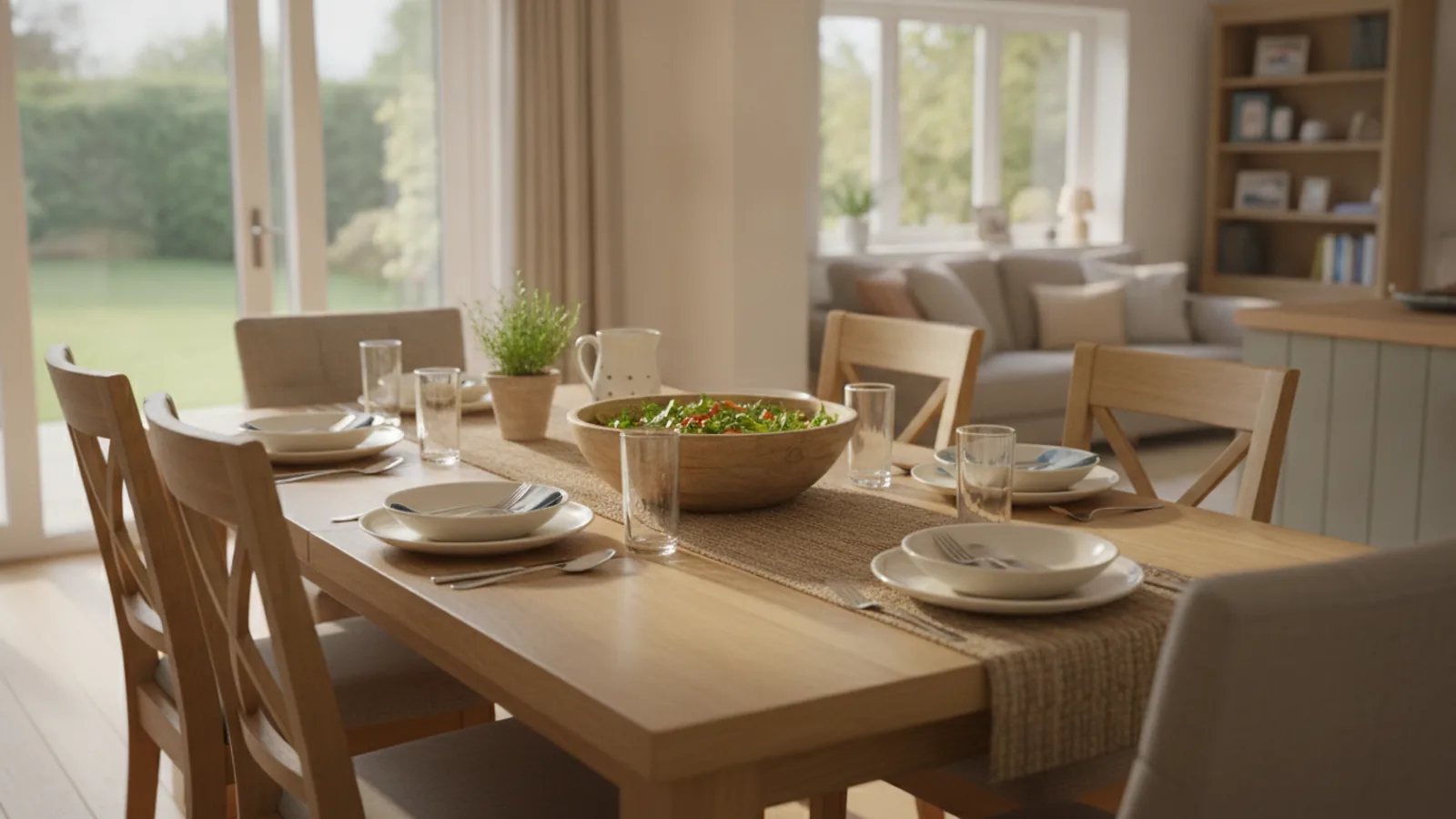
Now arrange the actual place setting for each seat. Start with a clean, dry flat surface. Lay a washable placemat at each seat, about 1 inch from the table's edge. Place the main plate directly in the center of the placemat. To the left of the plate, set the fork with tines up. To the right, place the knife with the blade facing the plate, and a spoon next to the knife. Put the drinking glass to the upper right of the plate. If you use napkins, fold them neatly and set them either to the left of the fork or on the plate; a napkin ring can make it festive. For daily use, use durable materials like stoneware and stainless steel. If you have children, use unbreakable plates and cups to reduce casualties. Make sure every place setting has the same items, even if they're not all used for that meal—it creates a consistent routine. Double-check that each person has enough room to move their arms without knocking into the next place setting. Setting universally in the same order helps kids learn the routine, and it makes the table look inviting before the food is even served.
Create a Simple Centerpiece and Lighting
A low centerpiece allows conversation to flow across the table while adding a warm touch. Choose a small vase with fresh or dried flowers that is under 12 inches tall, or a shallow bowl with seasonal fruit. Place it exactly in the center, leaving at least 8 inches of cleared space around it for dishes to be passed. Keep the arrangement compact so it doesn't block views. For lighting, aim for a warm glow that makes the food look appetizing without being too dim. If you have a pendant light above the table, set it at about 30 inches above the tabletop. For evening meals, light a few candles in unscented, sturdy holders, but only if you'll be attentive—never leave them burning when you leave the room. Alternatively, use a battery-operated table lamp with a dimmer. Update the centerpiece weekly with whatever is in season or what you already have. This simple visual center makes the table feel intentionally set, even on a weeknight, and it gives everyone something pleasant to look at while they sit.
Build a Daily Quick-Setup Routine
To make this setup sustainable, create a habit that takes only five minutes. After dinner each evening, clear the table and wipe it with a damp cloth. Then, immediately set the table for the next meal if your home allows it—or at least stack the dishes and utensils near the table so morning setup is easy. If you have kids, assign each child a simple task: putting out placemats, washing napkins, or filling water glasses. Keep all necessary items in one cabinet or drawer near the table so you don't have to hunt. Choose a consistent schedule: for example, set the table right after breakfast for dinner, or just before you start cooking. Also, designate a 'cleanup station' for condiments and salt shakers so they have a home on the table that you can quickly populate. Review your routine weekly to see what works and what to adjust. This repetition builds muscle memory, so setting the table becomes automatic and you'll never face a last-minute rush to find a fork. A steady routine also trains children to help without reminders.
Adapt the Setup for Different Meals and Occasions
Your everyday layout should be flexible enough to handle change. For a casual breakfast, you might skip the placemats and use only plates, mugs, and spoons. For a special Sunday dinner, add a soup bowl and salad plate to each setting. But the key is to know the 'base' setup you created and then layer on extras. When you host more guests, add folding chairs or a table leaf if you have one, and use a counter for a buffet. On nights when you're in a hurry, you can just place one plate, nothing else, but still aim to keep the table uncrowded. Think of your table as a stage: the everyday setup is the default, and you have a mental menu of add-ons. For example, if you're serving pasta, you might include a small bowl for grater cheese. If it's a stormy evening, add an extra lamp for coziness. Keep a small storage bin for seasonal decorations so you can quickly swap the centerpiece. This flexibility ensures that your table serves your family well on any given day without feeling rigid.
Quick Reference
| Situation | Action | Why it helps |
|---|---|---|
| Your family struggles to find forks and napkins at dinner because they're stored far away. | Move a drawer or cabinet slot near the table to hold all daily-use forks, knives, spoons, napkins, and placemats, and label each section. | Keeping everything within arm's reach reduces the effort of setting up and lets anyone grab what's missing in seconds. |
| A child keeps knocking over a glass or dish because the place setting is too close to the edge. | Push all place settings so that the plate edge aligns with the table edge, leaving at least 6 inches from the center of the plate to the table rim. | This provides a safe buffer zone, giving little arms enough room to sit without losing balance. |
| The table feels crowded with a big centerpiece and everyone's dishes, making passing food difficult. | Replace the tall centerpiece with a low, narrow tray no higher than 6 inches, and move that tray to one side or a sideboard during meals. | A low profile preserves the sight line and clear space in the middle, so people can pass dishes easily without reaching around obstacles. |
Common Issues
- People constantly shuffle chairs and bump into each other's backs when sitting down.: Measure the distance between chairs: aim for at least 18 inches between chair centers. If it's tight, remove one chair and use a small bench that slides under the table, or shift the table slightly to open up a wider walking path.
- The table top gets cluttered with homework, mail, and craft tools, so you can't set it for dinner.: Assign a specific 'drop zone' near the entrance—like a set of baskets or a shelf—for each family member's incoming items. After dinner, do a 2-minute reset where everyone clears their items to their own basket, keeping the table surface always ready.
- Condiments and salt shakers wander around the table, causing a search at every meal.: Assign a permanent 'condiment corner' on the table, perhaps in a low, small tray placed at one end, and return all bottles and shakers there immediately after each meal. Make it a rule that they never leave that spot.
Advanced Tips
- Use a full-length table runner to visually anchor the place settings, and arrange each setting so that the center of the plate aligns with the center of the runner, creating symmetry.
- Install a small wall-mounted utility bar behind the table to hang a caddy for salt and pepper, reducing tabletop clutter and keeping essentials off the surface.
- Incorporate a weekly 'theme night'—like Taco Tuesday or Pancake Sunday—and adjust your base setup with specific props (e.g., a taco holder) to make the routine feel varied without extra work.
Final Checklist
- Verify that everyone has at least 24 inches of personal table edge and can push their chair out without hitting an obstacle.
- Confirm that all place settings are within easy reach of a serving dish and that the center is clear for passing bowls.
- Check that lighting is bright enough for eating but not glaring, and that any candles are short and stable.
- Run a final look to ensure the table is tidy, with only the essentials in place, and that nothing is stacked for storage.
FAQ
How do I set a table for toddlers and babies without them breaking or throwing items?
Use unbreakable, suction-base bowls and plates that stick to the table or a high-chair tray. Skip knives and use toddler-safe utensils with short handles. Place the setting at the very edge but anchor it well. Also, keep the centerpiece far from their reach, and use a placemat that has a ridged border to scoop up stray food. Show them how to place their own cup and encourage them to set their place, making it fun and safe.
What is the best way to handle extra guests when you don't have enough chairs?
Consider borrowing folding chairs from a neighbor or keeping two simple folding chairs in a closet for exactly this purpose. If you lack space, use a bench or even a stool that allows a small person to sit. Alternatively, move the meal to a larger table area, like a kitchen island or a fold-out table. You can also let guests sitting at the main table serve themselves, and have a couple of people sit on a comfortable floor cushion for a casual picnic vibe, as long as they're comfortable.
How can we keep the table setting from feeling boring or robotic every day?
Change one small element each day without changing the whole layout. Rotate placemat colors (like having a set of 4 colors and letting each person pick), switch the napkin fold style, or add a seasonal flower or a small seasonal decoration. You can also swap the centerpiece fruit from apples to oranges. The goal is to keep the base functional but add a tiny visual surprise to avoid monotony, making mealtime feel fresh without extra effort.