How To Choose A Practical Kitchen Storage Refresh On A Modest Budget
A practical step-by-step guide to how to choose a practical kitchen storage refresh on a modest budget, including preparation, instructions, common issues, tips, and next steps.
How To Choose A Practical Kitchen Storage Refresh On A Modest Budget
Refreshing your kitchen storage on a modest budget is about making smart, low-cost changes that maximize space and improve function. Start by decluttering and measuring your existing cabinets, then prioritize quick wins like clear containers and door organizers. Use vertical space, repurpose everyday items, and create zones for similar items. Avoid common pitfalls like buying without measuring, and gradually build a system that fits your cooking habits. This guide will walk you through practical steps, offer quick fixes for common issues, and provide advanced tips for lasting organization, all without breaking the bank.
Fast Answer
- Measure your available space and take inventory of what you actually use before buying any storage products.
- Focus on the highest-impact, lowest-cost updates: clear bins, shelf risers, door racks, and labeled containers.
Before You Start
- Clear out one cabinet or drawer completely, and sort contents into keep, toss, donate, and relocate piles.
- Measure the interior width, depth, and height of each cabinet or drawer, and note door clearances.
- List the items you use weekly and group them by category (pans, spices, dry goods, utensils, etc.).
- Take photos of your cabinets and drawers to help visualize rearrangements and potential solutions.
Step-by-Step Instructions
Assess and Declutter Your Kitchen Storage
Begin by completely emptying one cabinet at a time. As you remove each item, decide if it is truly used: If you haven't used it in the past year and it is not a seasonal specialty, set it aside for donation or disposal. Look for duplicates and expired food; toss anything past its prime. This process helps you understand what you actually need to store. It is important to be honest with yourself about your cooking habits. The goal is to reduce clutter so that you can see everything you own, making it easier to organize. After decluttering, wipe down the cabinet interiors with a gentle cleaner to create a fresh start.
Measure Everything Before You Buy
Before purchasing any storage solution, grab a tape measure and record the dimensions of each cabinet, drawer, and shelf. Write down the interior width, depth, and height, and note any obstacles like pipes or hinges. Also measure the clearance when drawers and doors are open. This step is critical because many organizers are designed for standard sizes, but your kitchen may not fit those norms. For example, a shelf riser might be too tall for a cabinet above a sink. By having exact measurements, you can confidently choose items that will fit without wasting money on returns. Take your measurements to the store or keep them handy when shopping online.
Prioritize Zones for High-Traffic Items
Organize your kitchen into logical zones based on how you cook. Place everyday dishes near the dishwasher or sink, pots and pans near the stove, and spices near the prep area. Store rarely used items, like large serving platters, in higher cabinets or harder-to-reach spots. Within each zone, keep the most frequently used items at eye level or within easy reach from your natural cooking position. For example, your favorite skillet should be on a low shelf or hooks, not stacked under a heavy lid. This action reduces unnecessary bending, reaching, and time spent searching. A sensible test is to prepare a simple meal and notice how often you move between zones; adjust if something feels inconvenient.
Add Shelf Risers and Vertical Dividers
Shelf risers are inexpensive, tiered metal or plastic trays that double your usable shelf space by letting you store items in two layers. For example, place risers in a cabinet to store bowls on the lower tier and plates on the upper tier. Vertical dividers work well for baking sheets, cutting boards, and trays, which often topple over. Install a few simply by placing them in the cabinet, no drilling required. Before buying, measure the height of items you plan to store and the overall shelf height to ensure the riser does not block the cabinet. This simple addition can make a dramatic difference in a small kitchen without adding new furniture.
Use Clear Containers and Labels
Transfer dry goods like pasta, rice, cereal, and flour into clear, stackable containers and label them with the item name and purchase date. This keeps food fresh and makes it easy to see at a glance what you have and what is running low. When choosing containers, pick airtight ones that stack well to maximize vertical space. Write the date on the label or use a removable marker so you can track freshness. This practice reduces waste and prevents buying duplicates of items you already own. A check is to open your pantry and see all labels facing forward; if you can identify the contents without reading the label, you have succeeded.
Utilize Cabinet Doors and Walls
You can add storage to the inside of cabinet doors using adhesive hooks or small wire baskets for spices, pot lids, or measuring cups. On empty wall space, install a small pegboard or a simple rail to hold frequently used utensils or mugs. This keeps items visible and off countertops, freeing up work space. Before you drill or stick anything, make sure the surface is clean and dry, and choose hooks that can support the weight you plan to hang. If you are renting, use removable adhesive strips that do not damage paint. A practical check is to open the cabinet door fully and ensure anything attached clears the door frame and does not hit shelving inside.
Quick Reference
| Situation | Action | Why it helps |
|---|---|---|
| Your plates and bowls are stacked on each other, and you often lift a whole stack to get the one you need. | Add a simple wire shelf riser inside the cabinet to create a second layer for plates or bowls, keeping your everyday dishes on the bottom layer and seasonal items on the top. | You can access the most-used dishes without moving everything, saving time and reducing the chance of breakage. |
| Spices are jammed into a dark cabinet, and you cannot see what you have without pulling each bottle out. | Install a small step-tier spice rack or use a lazy Susan on your countertop or in a cabinet so all spice labels face outward. | You will instantly see your full spice collection, making meal prep faster and helping you avoid buying duplicates. |
| Baking sheets and cutting boards are stacked flat, making it hard to pull out the one in the middle without disturbing the whole pile. | Place a vertical divider organizer in the cabinet where you keep these items, and slide each sheet or board into its own slot. | This separates the items so you can pull out exactly what you need without toppling the stack, saving effort and preventing scratches. |
Common Issues
- You bought storage containers that do not fit because you estimated sizes instead of measuring shelf space.: Before buying any organizer, measure the exact depth, width, and height of the cabinet or drawer. Compare these numbers to the product dimensions listed on the packaging or website. If you already have ill-fitting items, return them or repurpose them for other rooms, and use your measurements for future purchases.
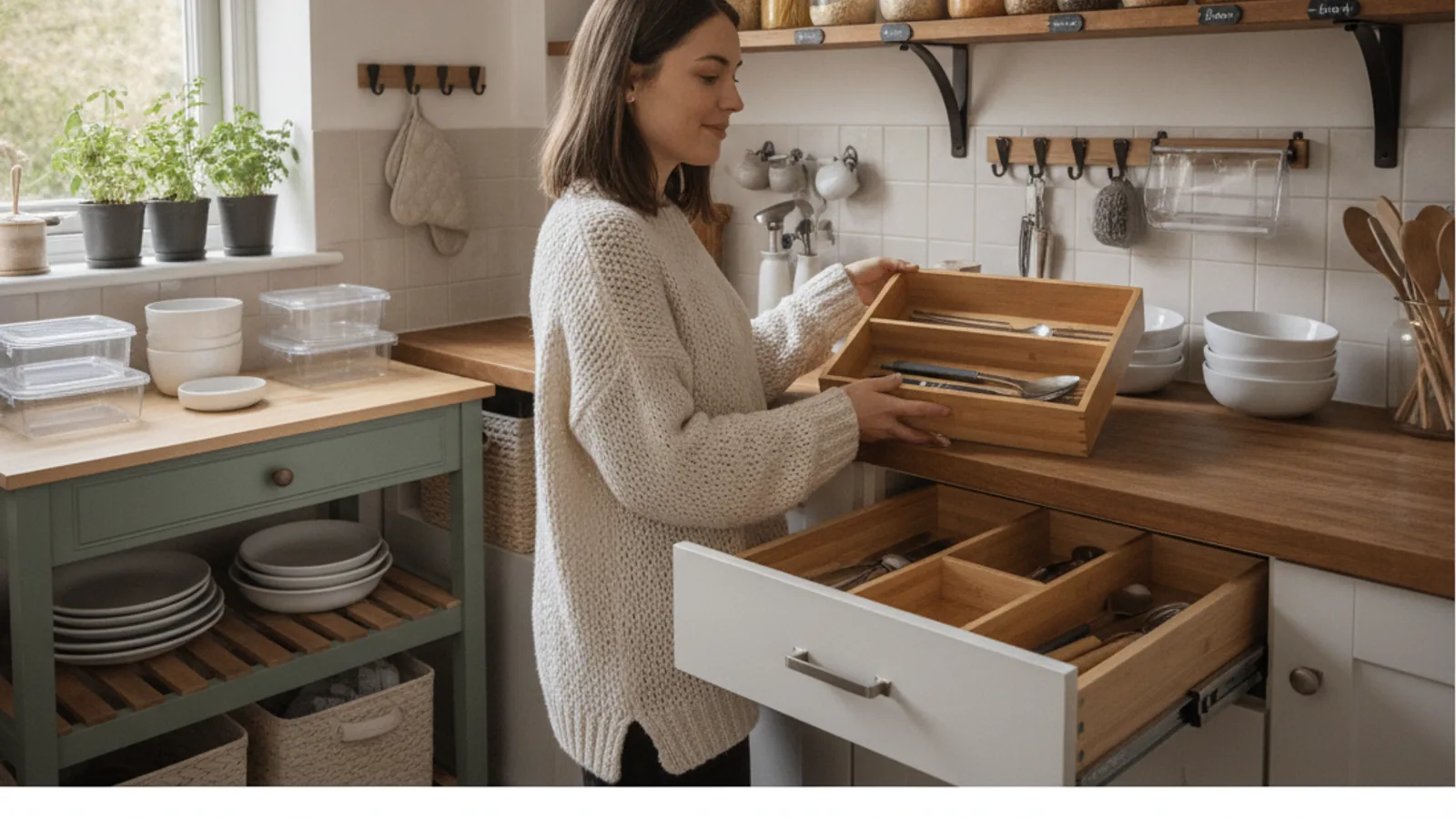
- Your drawers become a chaotic jumble of utensils and small items, making it hard to find anything.: Use adjustable drawer dividers to create compartments, or repurpose small boxes or trays you already own. Group similar utensils into categories such as cooking, serving, and baking. A simple tray for everyday forks and knives by the counter can reduce daily digging.
- You overestimated how many items you could store on a shelf and now the cabinet feels crowded and hard to use.: Remove everything, keep only what you use weekly, and store the rest elsewhere. Ensure tall items are placed at the rear and short items in front. Use shelf risers only if they do not block access to items behind them. If the shelf still feels cramped, consider removing one layer of stacking, even if it means using a lower area.
Advanced Tips
- Use the vertical space in tall cabinets by adding stacking shelves or hanging baskets from the rod inside; this often doubles the storage capacity without adding new furniture.
- Install a pegboard on the interior of a pantry door or a blank wall to hang measuring spoons, cups, and small tools, keeping them visible and at hand while freeing up drawer space.
- Repurpose everyday items you already own, like using a muffin tin for small snacks or a file organizer for cutting boards, to create unique storage solutions at no extra cost.
Final Checklist
- I have removed all items I do not use regularly and donated or disposed of duplicates and expired food.
- I have measured my cabinets, drawers, and doors, and any new purchases match those measurements exactly.
- I have organized my kitchen into zones based on how I cook, placing frequently used items in easy reach.
- I have added at least one vertical or door-mounted storage solution and labeled all dry goods in clear containers.
FAQ
What is the best way to store pots and pans when you have limited cabinet space?
The most practical approach is to store lids separately from the pots, either in a lid rack inside a cabinet or on a wall-mounted rail. For the pots themselves, consider a vertical divider to hold them upright, or use a pot rack that hangs from the ceiling or mounts to a wall. This frees up valuable cabinet space and makes it easy to grab the exact pan you need without wrestling with a stack.
How can I refresh my kitchen storage without spending much money?
Start by decluttering and reorganizing what you already own. Use clear containers you already have, repurpose shoeboxes or baskets for shelf binning, and use tension rods, hooks, and removable adhesive strips, which are inexpensive. Rearrange your items to maximize vertical space, and only buy a few key organizers like shelf risers or drawer dividers that you have measured for. These small changes can make a big difference in how functional your kitchen feels.
Is it better to store spices in a drawer or on a shelf?
There is no single best option; choose based on your kitchen layout and how you cook. A drawer with dividers keeps bottles visible and labeled, and it is easy to pull out and browse. A shelf with a tiered rack or a lazy Susan works well if you have low cabinets. The key is to place spices near your prep area and ensure they are at eye level. Whichever you choose, keep the most-used spices within arm's reach.