A Dining Table Setup For Everyday Family Meals Checklist For First Time Readers
A practical step-by-step guide to a dining table setup for everyday family meals checklist for first-time readers, including preparation, instructions, common issues, tips, and next steps.
A Dining Table Setup For Everyday Family Meals Checklist For First Time Readers
Setting a dining table for everyday family meals is a simple ritual that brings order and connection to your home. This guide walks first-time readers through the practical steps of placing plates, utensils, glasses, and napkins, along with tips for keeping the setup efficient and inviting. You will learn how to create a consistent, clutter-free table that welcomes everyone to sit down, share food, and talk. The routine takes only a few minutes once you know the basics, and it makes mealtimes feel special without fancy equipment or expensive decor. Whether you have a large family or a small one, these methods adapt to your space and needs, ensuring that every meal starts with a calm, prepared table.
Fast Answer
- Place a dinner plate in the center of each seat, with a folded napkin on top and a fork to the left, a knife and spoon to the right, and a water glass above the knife. Keep the table clear of clutter and add a simple centerpiece like a small vase with flowers or a bowl of fruit for a welcoming touch.
- Use a consistent setup order: first lay placemats or a tablecloth, then plates, then silverware, then glasses, then napkins, and finally any serving dishes or condiments. This sequence helps you remember everything and keeps the table balanced.
Before You Start
- Gather all necessary items before you start: plates, bowls, silverware (forks, knives, spoons), glasses or cups, napkins, and placemats if you use them. Having everything within reach prevents trips back and forth and makes the process smoother.
- Check that all dishes and utensils are clean and dry. A quick visual scan for spots or crumbs ensures a pleasant dining experience and avoids last-minute replacements.
- Decide on a simple centerpiece or table decoration that is low enough not to block views. A small vase with fresh flowers, a bowl of fruit, or a candle in a holder works well and adds warmth to the meal.
- Set aside a specific drawer or shelf for everyday tableware so you can find items quickly. This organization reduces stress and makes setting the table a quick habit.
Step-by-Step Instructions
Clear and Clean the Table Surface
Start by removing any items that are not part of the meal, such as homework, mail, or decorative clutter. Wipe the table with a damp cloth and a mild cleaner to remove dust, crumbs, or sticky spots. Let the surface dry completely before you place anything down. This step is important because a clean table helps prevent dirt from getting onto plates and utensils, and it also sets a calm tone for the meal. It also ensures that placemats or a tablecloth lie flat without slipping. Check the entire table, including corners and edges, to make sure no residue remains. Once the table is dry, you are ready to build your setup.
Lay the Base: Tablecloth or Placemats
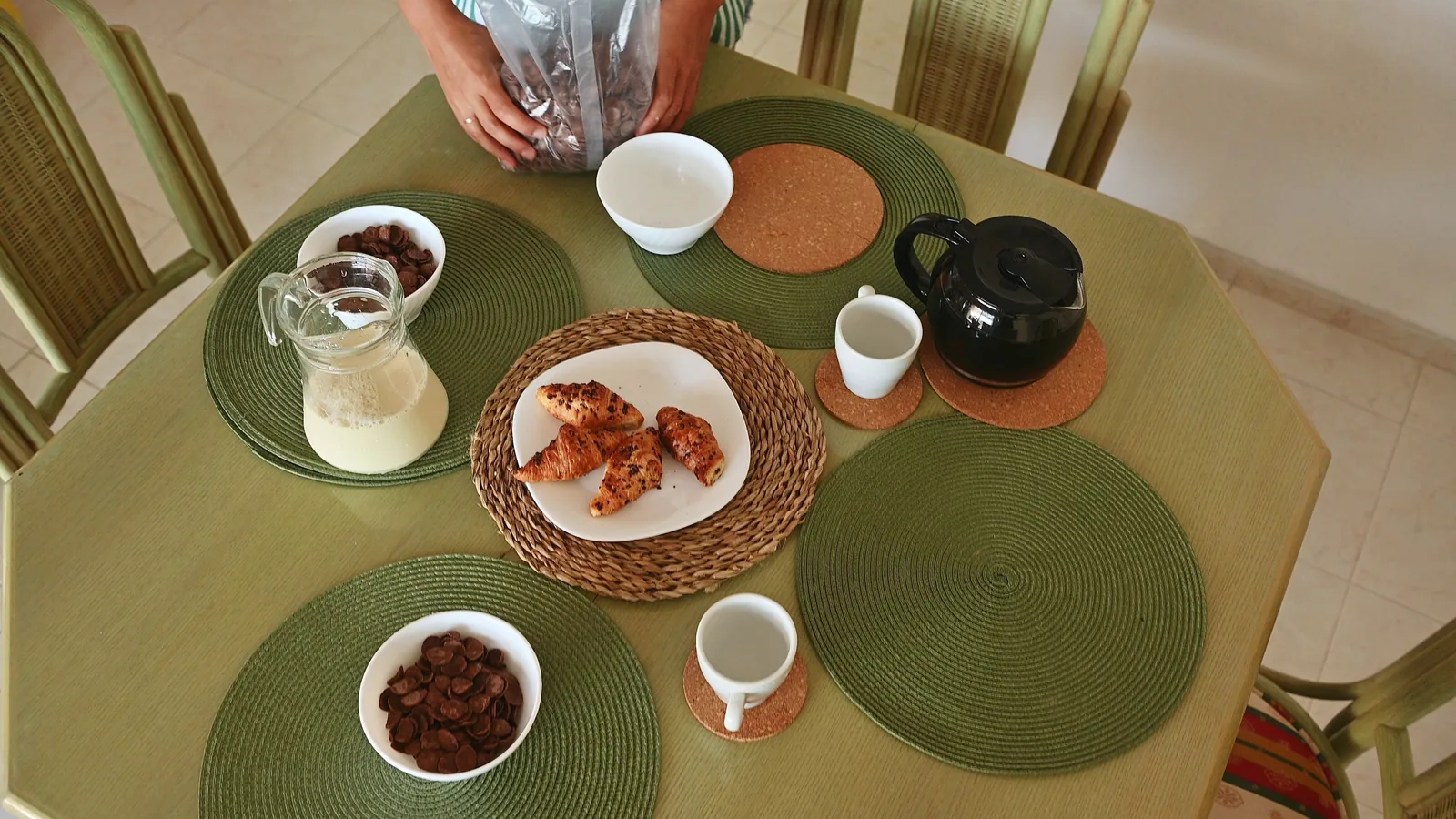
Choose a tablecloth or placemats that fit your table and are easy to clean. For everyday meals, placemats are often more practical because they can be wiped or washed individually. Lay one placemat at each seat, aligned with the chair's center, about one inch from the table edge. If you use a tablecloth, spread it evenly so it hangs the same length on all sides, and smooth out wrinkles. The base protects the table from heat and spills and adds a visual anchor for the rest of the setup. Check that the placemats are evenly spaced and not overlapping, especially if you have a small table. This simple foundation makes the whole table look neat and inviting.
Position the Dinner Plates
Place a dinner plate or a large flat plate at the center of each placemat, about one inch from the table edge but perfectly aligned with the chair. The plate is the focal point of each setting, so it should be clean and free of cracks. If you are serving a first course or salad, you can stack a smaller salad plate on top of the dinner plate, but for everyday meals, a single plate is enough. Check that the plate is centered; if the plate slips or slides, you may need a non-slip pad or a slightly heavier tablecloth. This placement ensures that each person has enough room to eat comfortably without bumping elbows with a neighbor.
Arrange the Silverware
Place the fork to the left of the plate, with tines facing up. On the right side, place the knife with the blade facing the plate, and the spoon to the right of the knife. The order should be: fork (left), plate, knife (right, blade in), spoon (right, outermost). If you are serving dessert, you can place the dessert fork or spoon horizontally above the plate. Spacing should be about one inch between pieces to avoid a crowded look. The silverware should be aligned at the base, about one inch from the table edge. This arrangement follows standard etiquette and lets everyone reach their utensils easily. Check that each piece is clean and polished; fingerprints can be wiped off with a napkin.
Set the Glassware and Napkin
Place a water glass or goblet directly above the knife, at about a 45-degree angle reaching toward the plate. If you are serving other drinks, like milk or juice, you can add an additional glass to the right of the water glass. The napkin is traditionally placed to the left of the forks, but for everyday ease, you can fold it simply and place it on the plate or under the forks. For a casual home meal, resting the napkin on the plate is perfectly acceptable. Check that the glasses are clean and free of water spots, and that the napkin is folded neatly. This arrangement keeps drinks out of the way but within reach, and provides everyone a napkin for their lap.
Add Serving Utensils and Centerpiece
If you are serving family-style, place serving spoons or forks in each dish before bringing them to the table. Position the dishes in the center of the table, within easy reach of everyone. Add a simple centerpiece, such as a low vase with flowers, a bowl of fruit, or a few candles (unlit if you prefer). Make sure the centerpiece does not block anyone's view across the table; keep it under about 10 inches in height. Check that all serving dishes have their own utensils and that hot dishes have a trivet or mat underneath. This final step makes the table look complete and inviting, and it ensures that everyone has what they need to serve themselves without asking for assistance.
Quick Reference
| Situation | Action | Why it helps |
|---|---|---|
| You are setting the table in a hurry on a busy weekday evening. | Set only the essentials: a plate, a fork, a spoon, a napkin, and a glass for each person. Skip the placemats and centerpiece, and keep extra dishes near the stove for serving. | This minimal setup covers the basics for a meal and saves several minutes while still providing a clear place for everyone. |
| You have young children who often knock over their glasses. | Use unbreakable, weighted cups with a wider base, and fill them only halfway. Place the cup away from the edge of the table, closer to the center. | Sturdy cups are less likely to tip, and a shorter amount of liquid reduces spills, making clean-up quicker and preventing messes. |
| You are serving a meal with a main dish and two side dishes, and the table feels crowded. | Move the side dishes to a serving cart or counter near the table, and pass them around. Only keep the main dish and a salad bowl on the table. | Keeping the table surface clear allows extra elbow room and reduces the chance of accidental spills, while still allowing everyone to help themselves. |
Common Issues
- Silverware falls off the table or slides around during the meal.: Lay a rubber mesh shelf liner or a textured placemat under the table setting. This grips the utensils and prevents them from sliding. Alternatively, roll the silverware in the napkin to create a neat bundle that is less likely to slide.
- The centerpiece is always in the way, blocking sightlines or making the table feel cramped.: Keep the centerpiece low and compact. Use a small vase with short flowers or a bowl of fruit that is at least 12 inches away from each plate. If the table is narrow, move the centerpiece to the side or use a wall-mounted shelf.
- The napkin is forgotten until after the meal starts.: Always place the napkin as part of the setup, either on the plate or under the fork. To remember, make a habit of counting one napkin per placemat as you set them down, or keep a stack of napkins on a sideboard near the table.
Advanced Tips
- Use a tray or a lazy Susan for condiments and small dishes so they can be spun to each person, reducing the need to reach across the table.
- Fold napkins into a simple pocket and tuck a fork inside for a neat, self-contained setting that is easy to grab when moving outdoors or to a different room.
- Designate a drawer or basket specifically for everyday table linens, such as placemats and napkins, so you can mix and match without digging through a pile.
Final Checklist
- Clear and clean the table surface completely before beginning the setup, and let it dry.
- Lay placemats or a tablecloth evenly, making sure they are centered and straight on the table.
- Place a dinner plate at each seat, centered on the placemat and aligned with the chair.
- Arrange the fork on the left, knife and spoon on the right, with the blade facing the plate, and position the glass above the knife.
FAQ
Do I need to follow strict formal etiquette for an everyday family meal?
No, formal etiquette is not necessary for daily meals. The goal is to have a consistent, comfortable setup that works for your family. Use the basic arrangement of fork on the left, knife and spoon on the right, and glass above the knife as a starting point, but feel free to adapt it to your family's needs, such as using only a fork and spoon if that is all you need. The key is to ensure everyone has what they need to eat comfortably.
How can I make the table look nice without spending much money or time?
You can create a welcoming table with simple items you likely already have. A clean, uncluttered table is the foundation. Add a small bowl of fruit or a handful of fresh herbs in a glass as a centerpiece. Use cloth napkins in a cheerful color if you have them, or fold paper napkins into a simple triangle. Lighting also matters: a few candles or natural daylight can make a huge difference. Keep the decoration simple and low so it does not interfere with conversation or serving.
What is the best way to teach children to set the table?
Start by assigning one simple task per child, such as putting out napkins or spoons. As they learn, give them a checklist or a chart that shows the correct placement. Practice together a few times, then let them set the table on their own. Praise their effort, and gently correct mistakes without criticism. Over time, they will internalize the routine, and it becomes a helpful habit that contributes to family cooperation.