A Useful Entryway Organisation Routine For Busy Households Checklist For First Time Readers
A practical step-by-step guide to a useful entryway organisation routine for busy households checklist for first-time readers, including preparation, instructions, common issues, tips, and next steps.
A Useful Entryway Organisation Routine For Busy Households Checklist For First Time Readers
This guide provides a practical, step-by-step entryway organisation routine for busy households, designed specifically for first-time readers. It offers clear instructions to create a functional and welcoming entryway that reduces daily stress and saves time. By following this routine, you can establish simple habits that keep your entryway tidy, ensure essential items are always within reach, and make coming and going easier for everyone in your household.
Fast Answer
- Start by clearing the entryway completely, then sort items into keep, relocate, or discard piles, and clean the space before setting up designated zones.
- Establish a daily 5-minute routine: sort incoming items, hang coats and bags, place shoes on racks, and put away anything that doesn't belong, using visual cues like baskets and hooks.
Before You Start
- Gather storage containers such as baskets, bins, hooks, and a shoe rack. Choose durable and easy-to-clean materials that match your space.
- Clear the entryway area completely. Remove all items, including furniture, and set them aside in a temporary holding area to give you a blank slate.
- Clean the floor, walls, and any built-in shelves or cupboards. A clean surface makes it easier to organise and keeps the area fresh.
- Set aside a timer for at least 30 minutes. This block of time is enough to complete the initial setup without rushing.
Step-by-Step Instructions
Clear and Sort the Entryway
Begin by removing every single item from your entryway. This includes shoes, coats, bags, mail, keys, umbrellas, and any decorative pieces. As you remove each item, place it into one of three piles: keep, relocate, or discard. The keep pile should contain items that are used daily or weekly and make sense to store in the entryway. The relocate pile includes items that belong elsewhere in your home, such as toys, tools, or paperwork. The discard pile is for items that are broken, worn out, or no longer needed. For the discard pile, consider donating or recycling items that are still in good condition. As you sort, be honest about what you truly need at the entrance. A good rule is to ask yourself, 'Do I use this at least once a week?' If not, it should probably be relocated or discarded. This step is crucial because it prevents you from simply reorganising clutter. By clearing everything out, you create a fresh start and avoid the temptation to keep items that don't serve a purpose in this high-traffic zone. Once you have sorted, move the relocate and discard piles out of the entryway immediately so they don't creep back in.
Clean the Entryway Thoroughly
With the entryway empty, take the opportunity to clean it thoroughly. Start by sweeping or vacuuming the floor to remove dirt, dust, and debris that have accumulated. Pay special attention to corners and edges where grit often gathers. If your flooring is hard, such as tile or wood, mop it with an appropriate cleaner. For carpeted entryways, use a vacuum with attachments to reach into crevices. Wipe down any walls, wainscoting, or baseboards with a damp cloth or sponge to remove scuff marks and grime. If you have a door, clean both the interior and exterior sides, including the door handle and frame. Don't forget to clean any light fixtures, switch plates, and nearby windows. This not only improves the appearance of the entryway but also creates a hygienic space for your family. After cleaning, let the area dry completely before placing any furniture or storage items. A clean base ensures that you start with a fresh, inviting environment. Cleaning also helps you notice any maintenance issues, such as loose hooks or cracked tiles, that you might need to fix later. Taking this step seriously sets the stage for a pleasant and functional entryway that you'll enjoy using every day.
Designate Zones for Daily Essentials
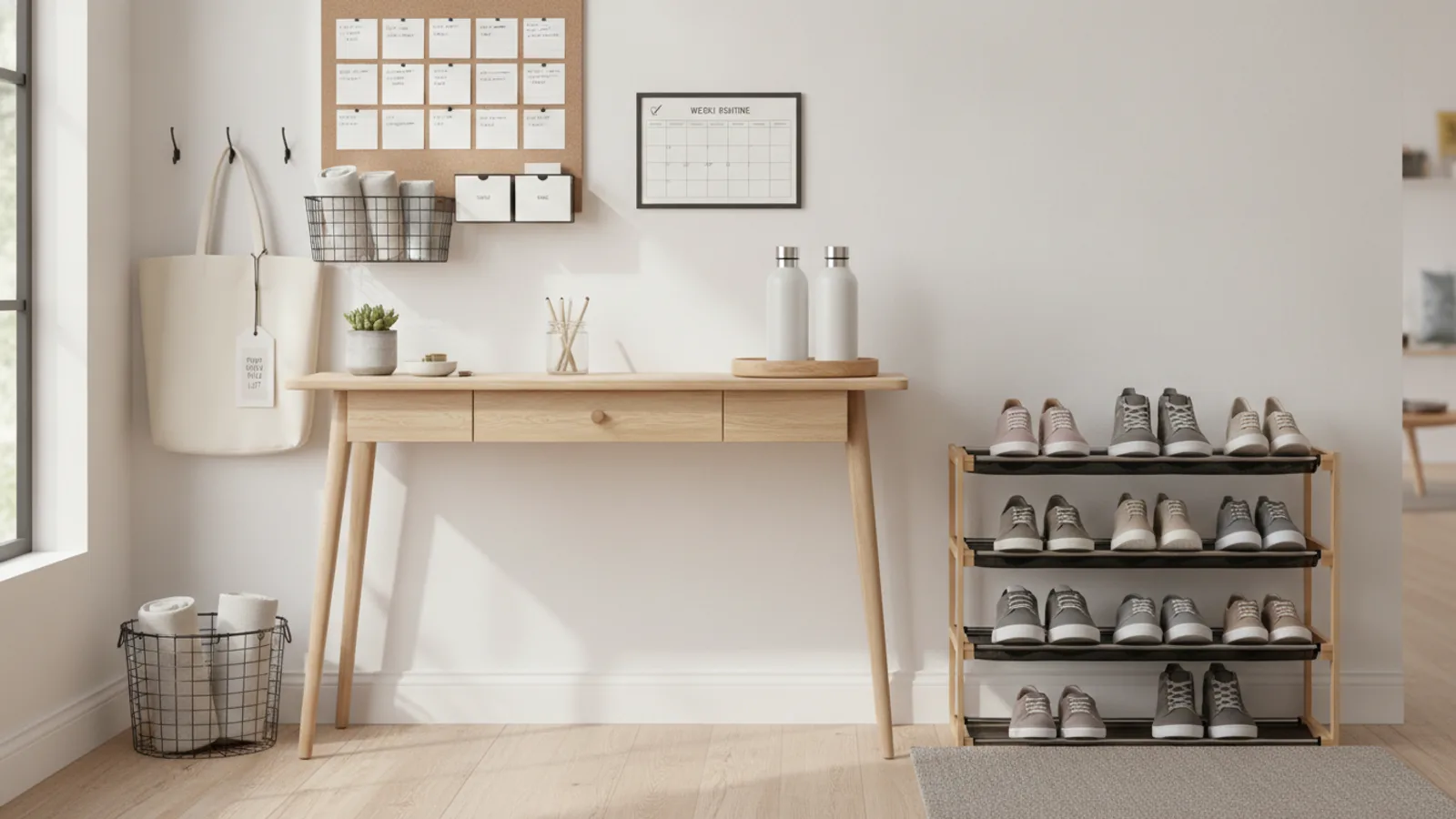
Identify the key activities that happen in your entryway: arriving, departing, and sometimes waiting. Based on these activities, create distinct zones for the items you need daily. The main zones are for outerwear, footwear, and personal items like keys, wallets, and bags. For outerwear, choose a wall or area near the door where you can install hooks at a height that everyone can reach, ideally at different heights for children and adults. Assign a hook or separate hooks for each family member to prevent confusion. For footwear, set up a shoe rack, a bench with storage, or a designated mat area. If you have limited floor space, consider using over-the-door shoe organisers or wall-mounted racks. For personal items, place a small catch-all tray or bowl on a console table or shelf near the door. This is where you'll drop keys, phones, sunglasses, and other small essentials. Also, designate a spot for outgoing items like library books, return packages, or school paperwork. Use a basket or a dedicated shelf for these items. Allocating specific zones ensures that everything has a home, making it easier for you and your family to find things quickly. This step is vital because it imposes order and reduces the likelihood of items being misplaced or scattered.
Set Up Storage Solutions
Now that you have planned your zones, it's time to install and arrange your storage solutions. Begin with hooks for coats, hats, and bags. Space them at least 15 centimetres apart to prevent items from overlapping. If you have children, install a lower row of hooks so they can independently hang up their gear. Next, place your shoe storage. If you have a bench with built-in shelves, use the shelves for shoes that are worn frequently and keep the floor area clear for putting on and taking off footwear. If you use a separate shoe rack, position it near the door but not blocking the entrance. Ensure that the rack has enough capacity for all the shoes you designated to keep. For small items like keys and mail, set up a catch-all tray or a small dish on a nearby surface. Make it a rule that keys go into the tray immediately upon coming home. For larger items like sports equipment or umbrellas, use a tall basket or a bin in a corner. Have a dedicated place for reusable shopping bags, perhaps hanging them on a hook or storing in a container. As you set up each solution, test that it is easily accessible and not obstructive. Place a small rug or mat at the door to trap dirt and provide a comfortable standing surface. This step turns your plan into reality and creates a functional system that will help you maintain order with minimal effort.
Create a Habit of Daily Tidying
The key to an organised entryway is consistency. Spend five minutes each day, preferably in the evening, to refresh the space. Start by picking up any items that were left during the day, such as shoes, bags, or mail. Return them to their designated zones. Hang up coats and jackets that may have been draped over chairs or railings. Wipe down surfaces like the catch-all tray and any built-in shelves with a damp cloth to remove dust and dirt. Sweep or vacuum the floor to clear away grit and debris tracked in during the day. This daily tidy prevents clutter from accumulating and keeps the entryway looking presentable at all times. It also allows you to quickly identify if anything is out of place or needs attention, such as a full shoe rack or a missing key. To make this habit stick, attach it to an existing routine, such as after dinner or right before you head to bed. You can even set a phone alarm to remind you. Involve all household members by assigning small tasks: a child might be responsible for placing shoes on the rack, while another empties the catch-all tray into a designated drawer. Daily tidying is not about deep cleaning but about maintaining a semblance of order. Over time, this five-minute ritual will become second nature and greatly reduce the stress of a chaotic entryway.
Review and Adjust the System Weekly
Once a week, take a few minutes to evaluate how your entryway system is working. Look for any areas where items tend to pile up or where the system is failing. For instance, you might notice that shoes are often left on the floor because the shoe rack is full or too far away. If so, consider expanding your shoe storage or relocating it to a more convenient spot. Similarly, if coats are still being draped over chairs, you may need additional hooks or a coat stand. Pay attention to the frequency of use and adjust accordingly: perhaps some items don't belong in the entryway at all. Ask family members for their input on what is working and what isn't. They may have practical suggestions for improvement. Also, as seasons change, your entryway needs will evolve. In winter, you'll need space for scarves and gloves; in summer, you might store rain gear. Make it a habit to swap out seasonal items and store off-season gear elsewhere. Use this weekly review to declare a 'reset day' where you spend a few minutes restoring the entryway to its ideal state. This ensures the system remains efficient and effective, and it prevents small issues from becoming large problems. This proactive approach saves time and keeps the entryway functional for your busy household.
Quick Reference
| Situation | Action | Why it helps |
|---|---|---|
| You walk in with wet umbrella and you're in a hurry. | Immediately place the umbrella in the designated umbrella stand or a sturdy bucket near the door. If none exists, roll it up and place it in a bin or on a mat near the entrance. | This prevents water from dripping across the floor, which can create slips and damage flooring. A consistent spot ensures you can find it easily for the next outing. |
| You have a large pile of mail and flyers that you haven't sorted. | Take two minutes to sort the pile right away. Separate into 'action' items (bills, forms) and 'shred/recycle' items. Place the action items in the designated tray or holder, and immediately put the rest in your recycling bin. | Dealing with mail immediately prevents it accumulating, which reduces clutter and ensures critical documents are not overlooked among junk. This habit also helps you manage tasks efficiently. |
| Family members constantly can't find their house keys. | Install a wall-mounted key rack or use a decorative dish on a console table. Every time you enter, place your keys in the designated spot. Make this the only place where keys are kept. | Having a single, universal location for keys eliminates the frustration of searching and reduces the risk of losing them. This simple habit will save time and reduce stress, especially during busy mornings. |
Common Issues
- Shoes pile up at the door because the shoe rack is too small or inaccessible.: Immediately declutter your shoe collection by removing any shoes that are out of season or rarely worn. Store these in a separate closet or under a bed. Then, invest in a shoe rack with enough capacity for the shoes you wear regularly, and place it in a convenient location near the entrance. If floor space is limited, use an over-the-door shoe organiser or wall-mounted shelves.
- Coats and jackets end up on chairs or the floor because there aren't enough hooks.: Add more hooks, ensuring they are at different heights to accommodate all family members, including children. Install a coat rack with multiple arms if wall space is at a premium. Alternatively, use a freestanding hall tree or a coat stand that can be placed in a corner. Make it a habit to hang up outerwear immediately upon coming home, and encourage family members to do the same.
- The entryway becomes dusty and dirty very quickly, making the area look untidy.: Place high-quality doormats both outside and inside the entrance to trap dirt. Use a 'shoes off' policy and provide a bench or seating area for removing shoes. Sweep or vacuum the entryway at least twice a week, and mop it weekly. Wipe down surfaces like hooks, shelves, and baskets with a damp cloth regularly. This reduces dust and keeps the area inviting.
Advanced Tips
- Install a small bowl or dish on a shelf near the door and make it the designated spot for keys, wallets, and other small essentials that need to be grabbed quickly when leaving.
- Use vertical space by adding a pegboard with hooks for hanging leashes, umbrellas, and reusable shopping bags, keeping them visible and accessible while freeing up floor area.
- Place a small rug or mat both outside and inside the entrance, and periodically shake them out and wash them to maintain hygiene and prolong their lifespan.
Final Checklist
- Cleared the entryway completely and sorted all items into keep, relocate, or discard piles.
- Deep-cleaned the entryway floor, walls, and storage surfaces to create a fresh start.
- Designated zones for outerwear, footwear, personal items, and outgoing items, with labelled storage solutions.
- Established a daily 5-minute tidying routine and a weekly review to adjust the system as needed.
FAQ
What should I do if my entryway is very small and cannot fit extra furniture?
Focus on vertical storage. Use wall-mounted hooks, shelves, and over-the-door organisers to maximise space without taking up floor area. A slim shoe cabinet that doubles as a console table can provide storage without dominating the room. Keep only the absolute essentials in the entryway and store seasonal or rarely used items elsewhere, such as a hall closet or wardrobe. Consider a compact bench with built-in storage for shoes and bags.
How can I involve children in keeping the entryway organised?
Assign age-appropriate tasks and make it fun. For example, give each child their own hook at a low height and label it with their name. Use a 'shoe race' game to encourage them to put shoes on the rack. Provide a colourful basket for their belongings. Celebrate their efforts with praise. By involving them in the daily tidy and making the system simple, they will more likely adopt the habit.
What are the best materials for entryway storage to handle heavy use?
Choose materials that are easy to clean and resistant to moisture. For hooks, metal or high-quality plastic are durable. For baskets and bins, consider wicker, metal wire, or sturdy fabric. For shoe storage, open shelves or racks made of wood are timeless, but ensure they are properly sealed. Avoid particleboard that can warp with moisture. Always wipe down surfaces regularly to maintain longevity.