What To Check Before A Useful Entryway Organisation Routine For Busy Households
A practical step-by-step guide to what to check before a useful entryway organisation routine for busy households, including preparation, instructions, common issues, tips, and next steps.
What To Check Before A Useful Entryway Organisation Routine For Busy Households
A useful entryway organisation routine for a busy household starts before you touch a single basket or hook. This guide walks you through the checks that prevent wasted effort, from understanding your family's real habits to measuring the space you actually have. You will learn how to sort items, assign homes, and create a simple daily reset that keeps the entryway functional even on chaotic mornings. The steps are practical, low-cost, and tailored to the way your household really moves through the door.
Fast Answer
- First, watch how your family enters and leaves for three days, noting what gets dropped and where, so your routine matches actual habits.
- Then, clear the entryway completely and sort every item into keep, relocate, or donate, before you buy any storage.
Before You Start
- Take a photo of the entryway from several angles to see clutter and traffic patterns you might normally overlook.
- Measure the width and depth of the floor, walls, and any built-in niches so every future storage purchase fits the actual space.
- Set a timer for 15 minutes and do a quick 'entryway-only' declutter, removing anything that does not belong.
- Write a list of the top five items each family member brings in daily, like keys, shoes, bags, or sports gear.
Step-by-Step Instructions
Observe the real entry pattern for three days
Place a notebook or a note-taking app near the door and note every time someone enters or leaves. Record what they carry, where they put items, and what they complain about. Do not change anything during this observation period. After three days, you will have a clear picture of the items that actually need a home. This check matters because most people organise based on an ideal vision, not on real habits. For example, you might think coats are the main problem, but the notes may show that backpacks and sports bags are dropped in the same corner every afternoon. You will use your notes to decide which items deserve prime storage locations. This step might feel slow, but it prevents wasted effort and money.
Clear the entryway completely
Take everything out of the entryway, including coats, shoes, bags, mail, keys, and decorative items. Place them in a temporary holding area like a living room floor or a dining table. Wipe down the walls, floor, and any furniture. As you clear, resist the urge to put items back immediately. This step gives you a blank canvas and shows you the true dimensions of the space. The check matters because you need to see the empty area to plan storage heights, widths, and traffic lanes. You will also notice any damage, like scuffed paint or a wobbly shelf, that should be fixed before you add new systems. Use your observation notes to decide which items will return to this space and which will be relocated.
Sort every item into four categories
Make four piles or boxes labelled 'keep here', 'keep elsewhere', 'donate', and 'toss'. Go through every item you removed and place it in one pile. For 'keep here', ask if the item is used within reach of this door at least weekly. For 'keep elsewhere', choose a specific new home, like a hall closet or a bedroom. For 'donate', place items that are still good but not used. For 'toss', include broken or useless items. This check matters because it forces you to separate need from nostalgia. Many entryways become dumping grounds for items that belong in a garage, a car, or a child's room. By making a firm decision for each item, you stop clutter from returning. If you are unsure, put the item in a 'maybe' box and revisit it in a month.
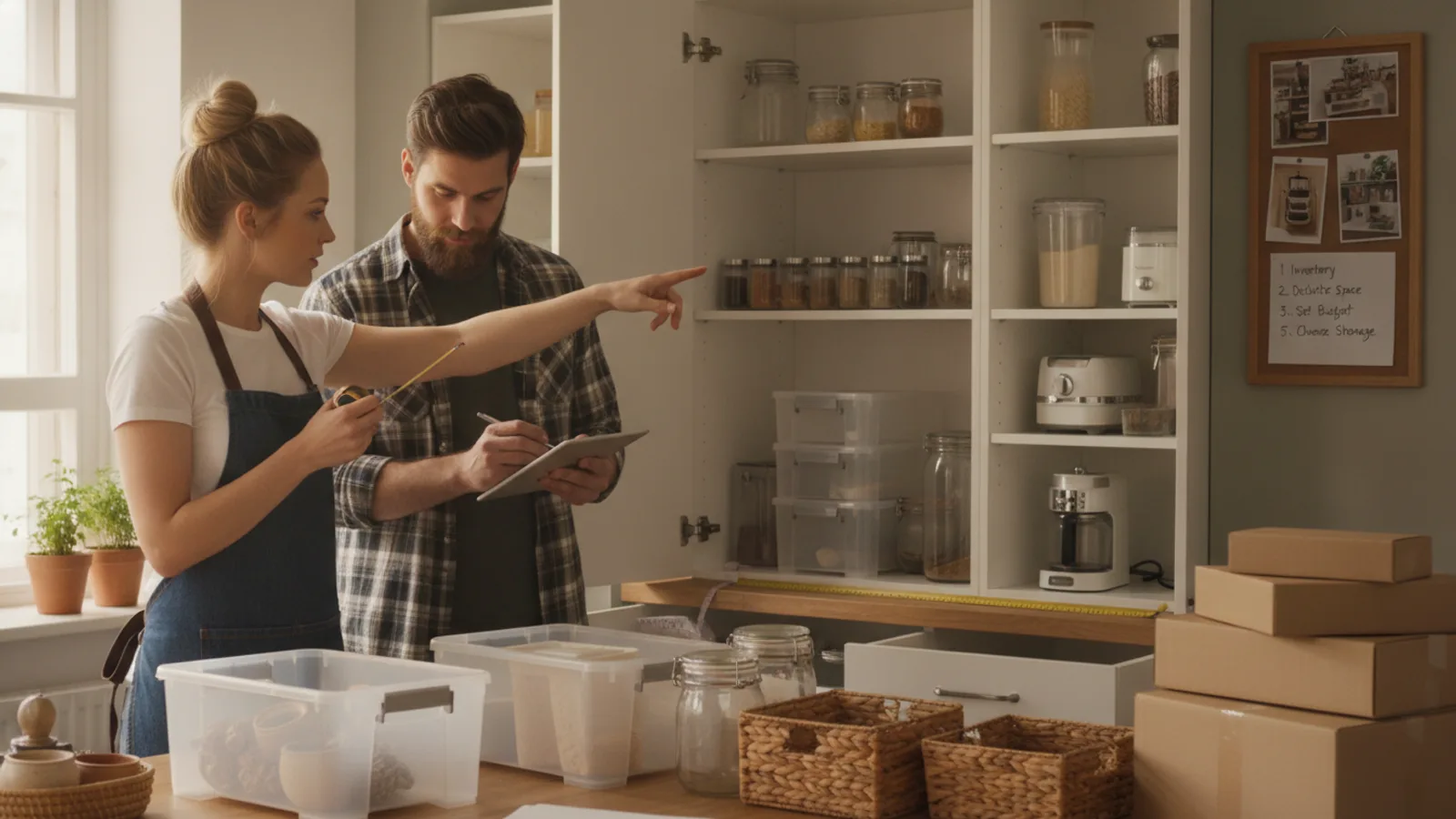
Measure and map the available space
Use a tape measure to record the height, width, and depth of every wall, floor area, and niche. Note the location of doors, windows, light switches, and radiators. Draw a simple sketch on paper, or use a notes app, including all measurements. Then mark the traffic lane: the path people actually walk from the door into the home. This check matters because storage only works if it does not block the way. A shelf that is too deep or a bench that sticks out will be an obstacle. Also, measure the items themselves, like the height of boots or the length of a backpack, to ensure the storage you plan will fit. Use your sketch to decide where each 'keep here' item will live, placing frequently used items at easy reach.
Assign a specific home for each kept item
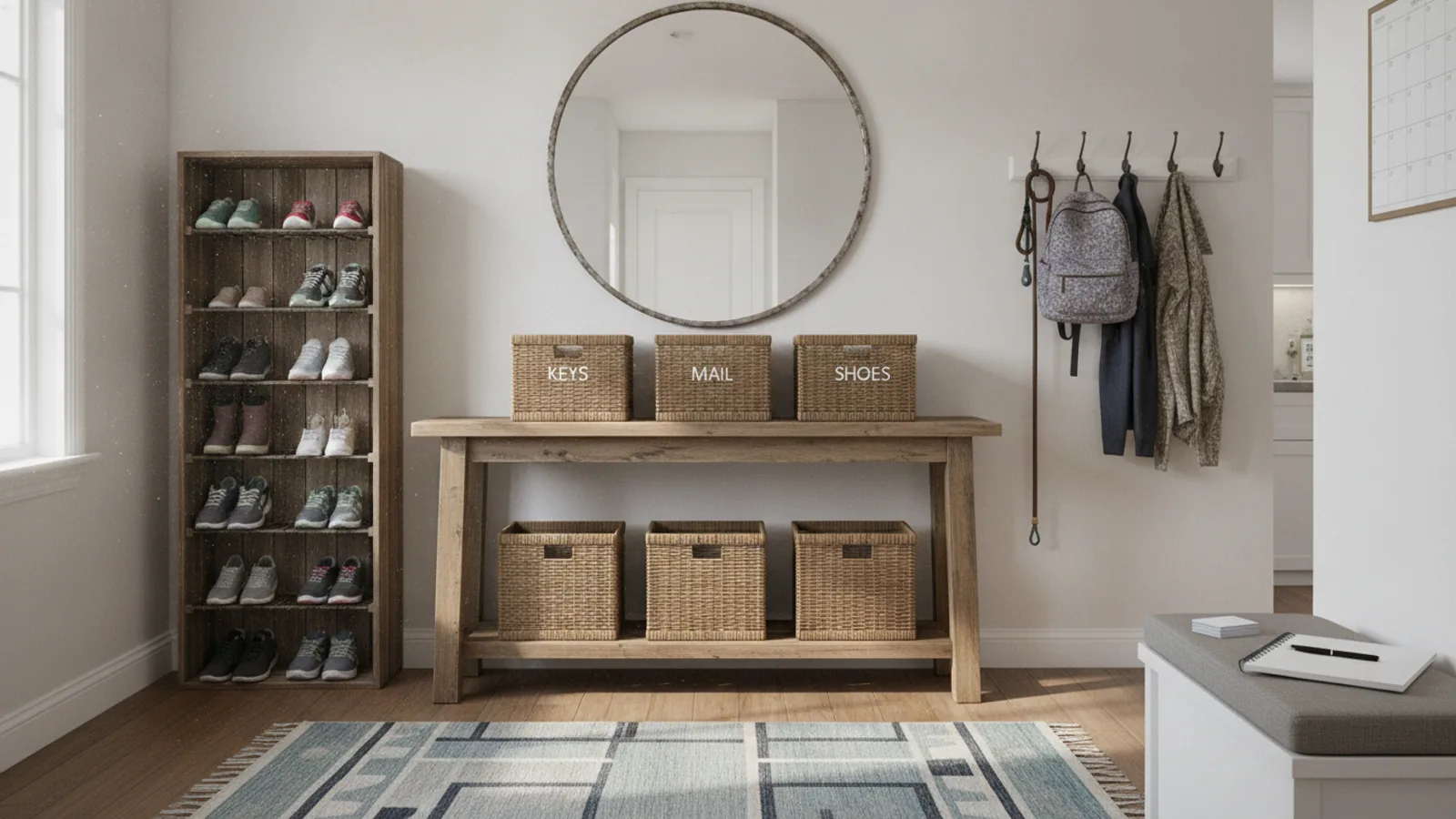
For every item that stays in the entryway, choose exactly where it lives. For example, keys go in a small dish on the shelf by the door, shoes go on the lower row of the shoe rack, and coats go on hooks by height. Write these assignments on a simple list or a diagram, and share it with the household. This check matters because a 'home' only works if it is the same place every time. When everything has a clear spot, putting items away becomes a quick habit, not a decision. It also helps you see when you have more items than homes, which means you need to cut back or add a small storage piece. Assign homes for the top items from your observation, like the backpack hook by the door and the mail tray on the counter.
Create a two-minute daily reset routine
Set a timer for two minutes each evening, and walk through the entryway to return any misplaced items to their assigned homes. Make this a habit for the whole family, perhaps right after dinner or before bed. During the reset, do not clean or reorganise, just return items to their spots. If you find items that have no home, put them in a 'relocate' basket to deal with weekly. This check matters because a daily reset prevents the entryway from becoming overwhelming and keeps the system functional. It also creates a sense of completion at the end of the day. Over time, the two-minute reset will feel almost automatic, and you will notice that clutter does not accumulate.
Quick Reference
| Situation | Action | Why it helps |
|---|---|---|
| Keys are consistently missing when you are about to leave | Place a small bowl or hook exactly by the door at the spot where you drop keys when you enter, and put them there every single time. | This action works because it uses the natural drop spot as the designated home, so you always know where to find them. |
| Shoes pile up just inside the door during the week | Set a rule that each person has one pair of shoes by the door, and the rest must be stored in the shoe rack or closet before bed. | This limit cuts the visual pile while keeping the entryway ready for quick exits, and it forces regular returns. |
| Mail and papers accumulate on the entry table | Put a single tray or folder for incoming mail on the table, and commit to sorting it every evening during the two-minute reset. | The tray confines the clutter to a small spot, and the set time makes the sorting action a routine, preventing piles. |
Common Issues
- You have more items than available storage space: Review every item and ask if it is used weekly or daily. For items you rarely use, relocate them to a more suitable room or donate them. If the space is truly too small for the necessary items, consider vertical storage, like a tall slim shelf, but first cut the number of items.
- The routine falls apart after the first week: If the system is not holding, return to your observation notes and see if anything changed. Maybe a family member started a new activity that adds more gear. Adjust the assigned homes to fit the new reality, and make sure the daily reset is short enough to be realistic.
- Family members do not use the assigned homes: Label each storage area clearly with words or pictures, and involve the family in the original assignment so they feel ownership. If they still ignore it, try a 'trial run' for a week, then review what works and what does not.
Advanced Tips
- Use clear, labelled containers for small items like gloves, scarves, and dog leashes, so they are visible and easy to grab during a rush.
- Install a small hook or peg at a low height for children's bags and backpacks, so they can put their own things away.
- Add a thin tray or mat at the base of the door to catch debris and moisture, and shake it out weekly to keep the floor clean.
Final Checklist
- Watch the entryway for three days and note the real items and movements.
- Clear the space fully, clean it, and fix any minor damage.
- Sort every item into keep, relocate, donate, and toss, and remove the unneeded ones.
- Assign a specific home for every kept item, and do a two-minute daily reset each evening.
FAQ
What if my entryway is very small?
In a small entryway, focus on vertical storage and minimalism. Use hooks for coats and bags, a shallow shoe shelf, and a small tray for keys. Limit items to daily essentials. You can also use the back of the door for shoe organisers or hooks.
How often should I do a full declutter of the entryway?
A full declutter once a month is ideal, but the two-minute daily reset should happen every day. The monthly declutter catches items that migrate in, like mail piles or out-of-season shoes, and lets you reassess the system.
What is the best way to handle seasonal items like snow boots or umbrellas?
Keep only the current season's items in the entryway. Store off-season boots and coats in a hall closet or under-bed bin. If you have space, add a low shelf or a bin at the bottom of the closet for seasonal shoes, and swap them at season change.